
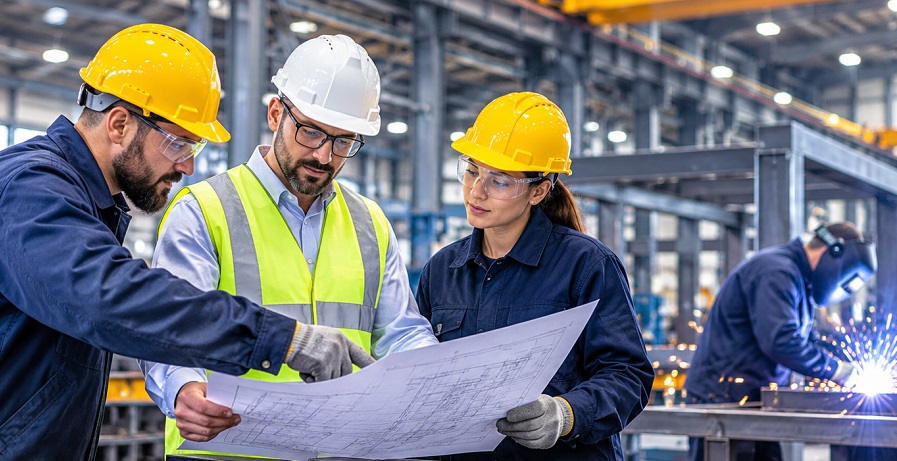
Managing a metal fabrication project involves much more than cutting, bending, and welding materials. It requires careful planning, technical knowledge, skilled labour, and proper coordination at every stage. This is where a full-service fabrication partner can make a real difference. Instead of dealing with separate suppliers for engineering, material sourcing, fabrication, finishing, and installation, businesses can work with one experienced team. In Canada, this approach is particularly valuable for construction companies, manufacturers, industrial facilities, and infrastructure developers. A single point of contact makes communication easier and helps keep project requirements aligned from the initial concept to final delivery.
Better Project Efficiency and Reduced Lead Times
Time plays an important role in every manufacturing and construction project. Delays in material procurement, design approvals, production, or finishing can affect the entire schedule. Working with a full-service fabrication partner helps reduce these challenges through coordinated project management. When multiple fabrication processes are handled under one roof, there is less need to transfer materials between different vendors or repeatedly explain technical requirements. Teams can plan production activities more effectively and identify potential issues earlier. Many Canadian fabricators also offer CNC cutting, automated welding, precision forming, and assembly services. These capabilities can improve production consistency and help businesses meet demanding project deadlines.
Consistent Quality and Compliance with Canadian Standards
Quality is not something businesses should compromise on, especially when fabricated components are used in structural, industrial, or commercial applications. A reliable fabrication partner follows documented quality procedures and performs appropriate inspections throughout production. This helps identify defects before components reach the installation stage. Canadian projects may also require compliance with specific industry standards, depending on the application. For example, CSA W47.1 covers company certification for fusion welding of steel, while CSA W47.2 applies to fusion welding of aluminium. The Canadian Welding Bureau (CWB) administers these certification programmes. Choosing a suitably certified fabricator can provide greater confidence in welding procedures, personnel qualifications, and overall workmanship.
Cost Savings Through Smarter Planning and Material Management
A lower initial quotation does not always mean a more affordable fabrication project. Unexpected design changes, material waste, production errors, and repeated transportation can increase the overall cost. A full-service partner can help control these expenses by reviewing designs before manufacturing begins. Design for Manufacturability and Assembly (DFMA) is particularly useful because it focuses on making components easier and more economical to produce and assemble. An experienced engineering team can recommend suitable materials, simplify complex designs, and identify opportunities to reduce unnecessary fabrication steps. Better coordination between procurement and production can also minimise waste. Over time, these improvements can deliver meaningful savings without sacrificing the required quality.
Access to Advanced Equipment and Skilled Technical Expertise
Investing in modern fabrication machinery, specialised software, and qualified professionals requires significant financial resources. By partnering with an established fabrication company, businesses can access these capabilities without maintaining every resource themselves. Depending on the provider, services may include laser cutting, CNC machining, precision bending, robotic welding, surface finishing, and custom assembly. Access to experienced engineers and fabricators is equally important. They can help solve technical challenges, interpret complex drawings, and recommend practical manufacturing solutions. For Canadian businesses operating in construction, agriculture, mining, transportation, and energy, this combination of technology and experience can make demanding fabrication requirements easier to manage.
Stronger Accountability and Long-Term Business Relationships
Perhaps one of the most valuable benefits of a full-service fabrication partnership is having a team that understands the bigger picture. When several contractors handle different stages, responsibility can become unclear if something goes wrong. A dependable partner provides better coordination and a clearer line of communication. Businesses can discuss design changes, production updates, quality concerns, and delivery expectations with one team. This also creates opportunities for long-term collaboration. As a partner, such as a custom steel fabricator in Ontario, becomes familiar with a client’s products, technical specifications, and operational needs, future projects can become easier to plan. For Canadian companies looking to expand production or manage increasingly complex projects, this relationship can provide lasting operational value.
Final Thoughts
Working with a full-service fabrication partner is about more than outsourcing manufacturing tasks. It is about building a reliable working relationship that supports quality, efficiency, cost control, and consistent project delivery. The right partner brings together engineering knowledge, modern equipment, skilled professionals, and organised project management. However, businesses should evaluate a fabricator’s experience, technical capabilities, relevant CWB certifications, quality procedures, and communication practices before making a decision. Choosing a partner that understands both the technical requirements and commercial goals of a project can help Canadian businesses achieve dependable results and build a stronger foundation for future growth.