
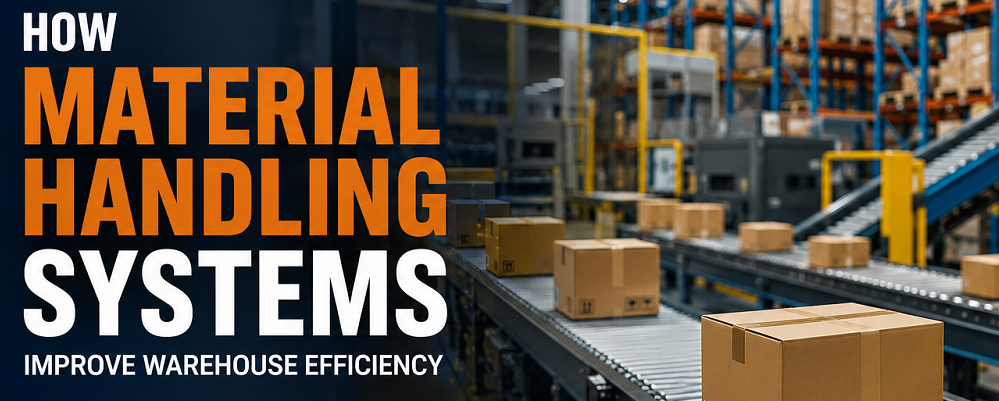
As Canada’s supply chain and logistics sectors continue to expand, warehouses are under increasing pressure to process higher volumes of inventory while maintaining accuracy, safety, and speed. From manufacturing facilities in Ontario to distribution centers serving customers across North America, efficient warehouse operations have become a critical competitive advantage. One of the most effective ways organizations are meeting these demands is through the implementation of modern material handling systems.
These systems encompass the equipment, technologies, and processes used to move, store, protect, and control materials throughout a facility. These systems can include conveyors, pallet racking, automated storage solutions, lifting equipment, forklifts, sorting systems, and integrated warehouse management technologies. When properly designed and installed, they create a streamlined flow of goods that minimizes delays and maximizes productivity.
Reducing Bottlenecks and Increasing Throughput
One of the primary benefits of material handling systems is their ability to eliminate operational bottlenecks. In traditional warehouses, workers often spend significant time manually transporting products between receiving, storage, picking, packing, and shipping areas. These repetitive tasks can slow operations and create congestion in high-traffic zones.
Modern material handling solutions automate or simplify many of these movements, allowing products to travel efficiently through the warehouse. Conveyors, automated guided systems, and optimized storage layouts reduce unnecessary handling and shorten travel distances. As a result, warehouses can process more orders in less time, improve throughput, and respond more effectively to fluctuating customer demand. For Canadian businesses managing seasonal inventory surges or serving large geographic regions, these efficiency gains can significantly improve overall performance.
Improving Inventory Accuracy and Organization
Warehouse efficiency is not solely about speed, it also depends on inventory accuracy. Misplaced products, stock discrepancies, and picking errors can lead to costly delays, customer dissatisfaction, and operational inefficiencies. Material handling systems help address these challenges by creating structured storage environments and standardized workflows.
Well-designed racking systems, labeling strategies, and automated inventory tracking technologies make it easier for employees to locate and manage products. When inventory moves through predefined pathways and storage locations, organizations gain better visibility into stock levels and product availability. This enhanced control reduces the likelihood of errors while improving order fulfillment accuracy. In industries such as manufacturing, pharmaceuticals, food processing, and distribution, maintaining accurate inventory records is essential for both operational success and regulatory compliance.
Enhancing Workplace Safety and Reducing Labour Strain
Safety remains a top priority in warehouses across Canada. Manual lifting, repetitive movements, and the transportation of heavy materials can increase the risk of workplace injuries and contribute to employee fatigue. Material handling systems help create safer working environments by reducing the physical demands placed on workers.
Equipment such as hoists, lift tables, conveyors, and automated transport systems minimizes the need for manual handling while improving ergonomic conditions. Employees can focus on higher-value tasks instead of repeatedly moving heavy products throughout the facility. Fewer workplace injuries often lead to reduced downtime, lower compensation costs, and improved workforce productivity. In addition, organizations that prioritize safety typically experience stronger employee retention and higher job satisfaction, both of which contribute to long-term operational efficiency.
Supporting Scalability and Future Growth
As businesses grow, warehouse operations must be able to scale efficiently. Facilities that rely solely on manual processes often struggle to keep pace with increasing inventory volumes and customer expectations. Material handling systems provide the flexibility needed to support future expansion without requiring a complete operational overhaul.
Modular storage systems, expandable conveyor networks, and strategically designed facility layouts allow warehouses to adapt as demand changes. Whether a company is expanding its product offerings, entering new markets, or increasing production capacity, a properly engineered material handling solution can accommodate growth while maintaining operational efficiency. For Canadian businesses competing in increasingly complex supply chains, this scalability is essential for long-term success.
Investing in Long-Term Warehouse Performance
Material handling systems are far more than equipment installations, they are strategic investments in warehouse performance. By improving product flow, reducing bottlenecks, increasing inventory accuracy, enhancing safety, and supporting future growth, these systems help organizations operate more efficiently while controlling operational costs.
As warehousing and distribution demands continue to evolve across Canada, businesses that invest in modern material handling solutions position themselves for greater productivity and competitiveness. Working with experienced professionals to design, fabricate, install, and optimize material handling systems, supported by effective industrial project management in Canada, enables facilities to achieve maximum efficiency while preparing for future operational challenges. The result is a safer, more organized, and highly productive warehouse capable of meeting today’s demands and tomorrow’s opportunities.