
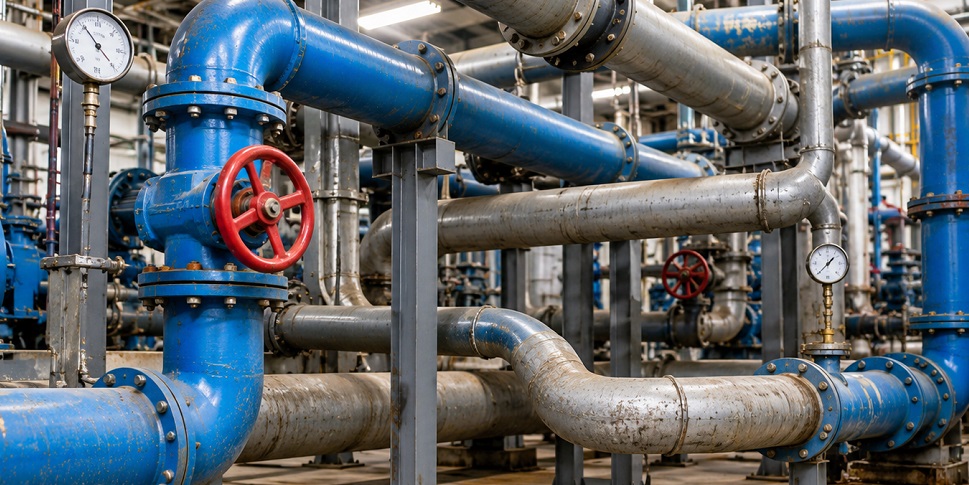
Piping systems play an important role in manufacturing plants, food processing facilities, industrial warehouses, and other production environments across North America. They transport water, steam, compressed air, chemicals, gases, and other materials required for daily operations. However, the performance of these systems depends on more than pipe quality and installation. Their overall layout also affects maintenance requirements, equipment reliability, and operating expenses. Poorly planned piping can create problems that become increasingly expensive over time. In Canada, the United States, and Mexico, industrial facilities need properly designed piping systems that support efficient operations and allow maintenance teams to perform their work safely.
Limited Accessibility Makes Maintenance More Difficult
One of the most common problems with poor piping layouts is limited access to important components. Valves, joints, fittings, filters, and inspection points may be installed behind machinery or in congested areas. This makes routine inspections and repairs more complicated. Maintenance technicians may need to remove nearby equipment, arrange additional access platforms, or temporarily interrupt production before reaching the affected section. Even a relatively small repair can take longer when workers cannot easily access the required components. A well-planned layout should provide sufficient clearance around essential equipment and allow technicians to inspect, operate, and replace components without unnecessary disruption.
Poor Pipe Routing can Increase Wear and Damage
Incorrect pipe routing can place unnecessary stress on piping systems and connected equipment. Sharp changes in direction, unsuitable support arrangements, excessive unsupported lengths, and inadequate allowance for thermal expansion can contribute to vibration, leakage, and mechanical damage. Industrial facilities operating with steam, hot water, chilled fluids, or high-pressure services must consider temperature changes and operating conditions during design. Poorly supported pipes may sag or transfer unwanted loads to pumps, valves, and equipment connections. These problems can lead to repeated repairs, replacement costs, and unplanned maintenance. Proper pipe supports, suitable routing, and engineering calculations help improve system reliability and reduce avoidable wear.
Poor Drainage and Routing can Contribute to Corrosion
Piping arrangements that allow unwanted liquid accumulation can create additional maintenance concerns. Depending on the service, trapped moisture, stagnant fluids, and unsuitable drainage can contribute to internal corrosion, contamination, deposits, or freezing risks. These issues are particularly important in industrial environments exposed to seasonal temperature changes across Canada and parts of the United States. Manufacturing facilities in Mexico must also consider local operating temperatures, humidity, process conditions, and fluid characteristics. Proper pipe slopes, suitable drain points, appropriate material selection, and accessible inspection locations help control these risks. Without these considerations, businesses may face recurring cleaning, inspection, repair, and pipe replacement expenses.
Unplanned Repairs can Increase Production Downtime
A poorly arranged piping network can make even routine maintenance a major operational challenge. When technicians struggle to isolate a damaged section or access an important valve, repairs may require shutting down larger parts of the facility. This can interrupt manufacturing schedules, delay customer orders, and increase labour costs. In food processing, chemical manufacturing, and other industrial operations, piping problems may also affect product quality and process reliability. Well-positioned isolation valves, clearly identified lines, accessible maintenance points, and properly coordinated equipment connections can make future repairs easier. Planning these details during installation helps reduce unnecessary shutdowns and supports more predictable maintenance schedules.
Better Piping Design Helps Control Long-Term Costs
Reducing piping maintenance costs starts with proper engineering, careful routing, and professional installation. Industrial businesses should consider equipment access, pipe support requirements, operating temperatures, fluid characteristics, drainage, and future expansion before finalizing a piping layout. Regular inspections and maintenance planning are equally important for identifying developing problems before they cause major failures. Applicable requirements and adopted standards, such as ASME B31.3 for process piping, should be considered alongside local regulations and project-specific engineering requirements. Working with experienced industrial fabrication and millwrighting professionals can also help facilities improve installation quality and equipment accessibility. A properly planned piping system is not simply an installation requirement. It is a long-term investment in operational reliability, workplace safety, and lower maintenance expenses.