
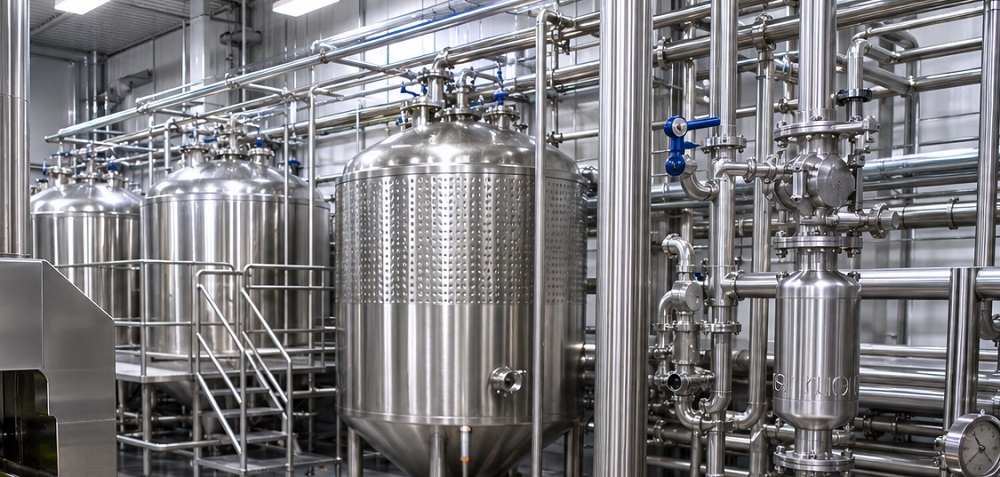
Food safety is one of the biggest priorities for food manufacturers across North America. As consumer expectations rise and regulations become more stringent, processors must invest in equipment that supports hygienic production from receiving raw ingredients to final packaging. Stainless steel has become the material of choice because it is durable, corrosion-resistant, and designed to meet the demanding sanitation requirements of modern food facilities. Regulatory agencies such as the FDA and CFIA emphasize sanitary equipment design, cleanable food-contact surfaces, and preventive food safety systems like HACCP. Equipment built with high-quality stainless steel helps manufacturers reduce contamination risks while maintaining consistent product quality and regulatory compliance.
Non-Porous Surfaces Help Prevent Bacterial Growth
One of stainless steel’s greatest advantages is its smooth, non-porous surface. Unlike wood, painted metals, or materials that can crack or absorb moisture, stainless steel does not provide an environment where bacteria, mold, or food residues can easily accumulate. When equipment is properly fabricated with continuous sanitary welds, rounded corners, and minimal crevices, sanitation crews can clean and disinfect surfaces more effectively. This is especially important in facilities producing dairy products, baked goods, beverages, meat, frozen foods, and ready-to-eat meals, where even minor contamination can lead to product recalls. Food safety programs based on HACCP rely heavily on equipment that is easy to inspect, clean, and sanitize, making stainless steel an essential component of contamination prevention.
Superior Corrosion Resistance Supports Long-Term Hygiene
Food processing environments expose equipment to steam, moisture, acidic ingredients, salt, cleaning chemicals, and high-pressure washdowns every day. Food-grade stainless steel, particularly Grades 304 and 316, offers exceptional resistance to corrosion under these demanding conditions. Grade 304 is commonly used for general food processing applications because it provides excellent durability and cleanability. Grade 316 contains molybdenum, making it even more resistant to chlorides and aggressive cleaning environments, making it ideal for seafood, dairy, meat processing, and facilities using highly corrosive sanitizing agents. Because stainless steel resists rust and surface degradation, it reduces the risk of damaged areas where harmful microorganisms could survive, improving both equipment longevity and food safety.
Hygienic Equipment Design Improves Compliance and Product Quality
Modern food safety is about more than choosing the right material, it also depends on equipment design. Stainless steel allows manufacturers to build hygienic piping systems, processing tanks, conveyor frames, worktables, platforms, and custom fabrication that eliminate unnecessary joints, gaps, and hidden spaces where contaminants could collect. Regulatory guidance recommends food-contact surfaces that are smooth, corrosion-resistant, durable, and easily cleanable. Stainless steel also does not react with most foods, helping preserve their flavour, colour, aroma, and nutritional quality throughout processing. Whether manufacturing bakery products, beverages, pharmaceuticals, pet food, or fresh produce, hygienically designed stainless steel equipment helps facilities achieve higher production standards while simplifying routine sanitation procedures.
A Smart Investment for North American Food Manufacturers
Although stainless steel equipment often requires a higher upfront investment than alternative materials, its long-term value makes it the preferred choice for modern food processing facilities. Lower maintenance costs, greater resistance to wear, faster cleaning, reduced downtime, and longer service life contribute to a lower total cost of ownership. More importantly, hygienic stainless steel equipment helps manufacturers protect their brand reputation by minimizing contamination risks and supporting regulatory compliance. As North America’s food industry continues to prioritize preventive food safety, automation, and sustainable manufacturing, investing in professionally fabricated stainless steel equipment is no longer simply a best practice, it is a strategic business decision. Companies that combine high-quality stainless steel fabrication with proper sanitation programs are better positioned to deliver safe, consistent, and high-quality food products while meeting the evolving expectations of customers, retailers, and regulatory authorities.