
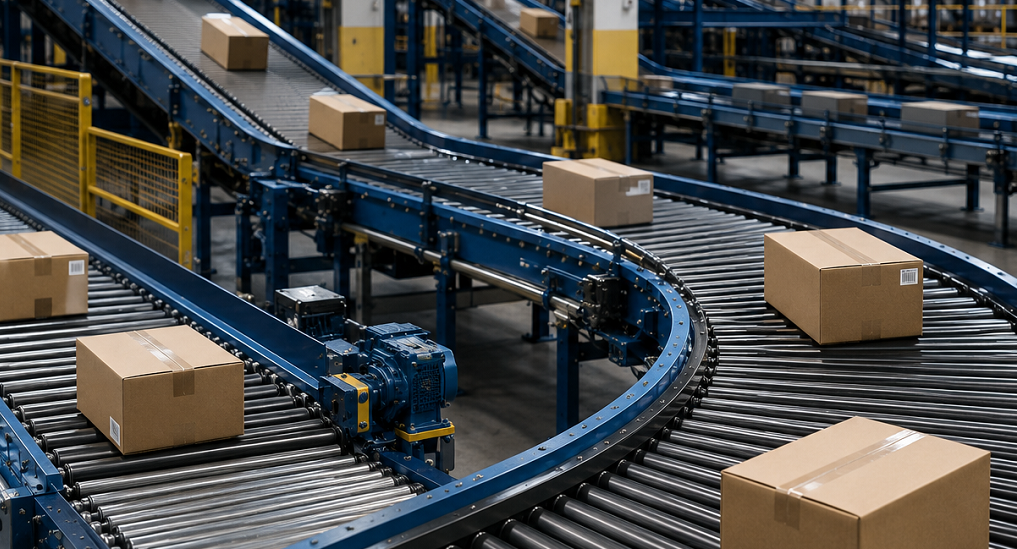
Distribution facilities across North America operate in an environment where speed, accuracy, and uptime directly influence customer satisfaction. From e-commerce fulfillment centers to third-party logistics (3PL) warehouses and retail distribution hubs, conveyor systems are the backbone of material handling operations. A single conveyor failure can delay shipments, increase labor costs, and disrupt an entire supply chain. As warehouses continue to adopt advanced technologies and handle higher throughput, maintaining conveyor reliability has become more important than ever. Industry best practices also emphasize that safety, preventive maintenance, and equipment reliability must work together to maximize operational efficiency.
Belt Tracking Problems and Premature Component Wear
Conveyor belt mistracking remains one of the most frequent causes of downtime in distribution facilities. When a belt drifts off-center, it creates uneven friction against the conveyor frame, damaging belt edges, rollers, pulleys, and bearings. Common causes include improper installation, uneven product loading, worn idlers, debris buildup, and incorrect belt tension. If ignored, a minor tracking issue can quickly escalate into costly repairs and unexpected shutdowns. Routine inspections, proper belt alignment, and immediate replacement of worn rollers help maintain smooth product flow while extending the service life of the entire conveyor system.
Motor Failures, Sensor Malfunctions, and Electrical Issues
Modern distribution centers depend on intelligent conveyor controls that combine electric motors, variable frequency drives (VFDs), barcode scanners, photo-eye sensors, PLCs, and warehouse management software. When any of these components fail, the entire material handling process can slow down or stop. Overheated motors, loose electrical connections, failed sensors, and communication errors often lead to missed product scans, inaccurate routing, and unexpected system shutdowns. Many North American facilities now use predictive maintenance technologies that continuously monitor vibration, motor temperature, and power consumption, allowing technicians to identify potential failures before they interrupt operations. This proactive approach significantly reduces emergency repairs while improving equipment availability.
Product Jams, Poor Loading Practices, and Accumulation Bottlenecks
Distribution facilities process thousands of cartons, totes, poly bags, and pallets in different sizes every day. When products are loaded unevenly, exceed weight limits, or arrive in damaged packaging, conveyor jams become increasingly common. Accumulation zones can also become bottlenecks if sensors fail to detect product spacing accurately or if downstream equipment slows production. These interruptions reduce throughput and may increase product damage during peak shipping periods. Warehouse operators can minimize these problems by standardizing packaging dimensions, maintaining proper conveyor speeds, calibrating sensors regularly, and training employees on correct loading procedures. Reviewing conveyor layouts periodically also helps eliminate recurring congestion points and improves overall material flow.
Deferred Maintenance and Safety Compliance Risks
Many conveyor failures are not caused by defective equipment but by delayed maintenance. Bearings gradually wear out, chains stretch, belts lose tension, and rollers accumulate dust and debris that increase friction throughout the system. Waiting until equipment breaks often results in longer downtime and higher repair costs than following a preventive maintenance schedule. Equally important is maintaining workplace safety. OSHA recommends proper machine guarding, lockout/tagout procedures during maintenance, routine inspections, and employee training to reduce the risk of conveyor-related injuries. Facilities that combine preventive maintenance with strong safety practices typically experience greater equipment reliability, lower operating costs, and fewer unplanned production interruptions.
Building a More Reliable Conveyor Operation
As advanced technologies continue to transform North American distribution facilities, conveyor systems are expected to operate longer hours with minimal interruptions. Achieving that level of reliability requires more than repairing equipment after a breakdown. Successful facilities invest in condition monitoring, scheduled inspections, predictive maintenance, employee training, and continuous system optimization. Regular audits of belt tracking, drive components, sensors, and safety devices help identify small issues before they become expensive failures. By adopting a proactive maintenance strategy and following recognized industry best practices, distribution facilities can improve productivity, reduce downtime, enhance worker safety, and build a more resilient supply chain capable of meeting growing customer expectations.