
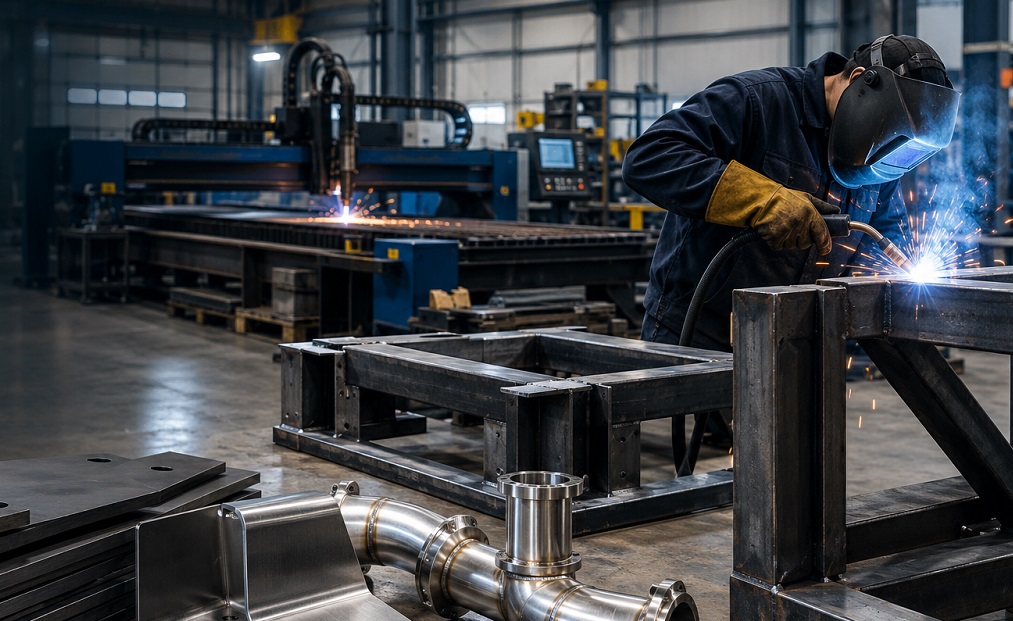
Metal fabrication is the process of turning raw metal into useful parts, components, structures, and equipment. It can involve cutting, bending, forming, welding, machining, and assembling metal. In Canada, fabrication is widely used in construction, manufacturing, food processing, transportation, warehousing, and other industrial sectors. Fabricators may work with carbon steel, stainless steel, aluminum, and other metals based on the project requirements. Modern fabrication can also use CNC machines, laser cutters, plasma cutters, and computer-aided design (CAD) systems.
What is Structural Steel Fabrication?
Structural steel fabrication focuses on producing steel components used in buildings, industrial facilities, bridges, and other structures. Common products include beams, columns, plates, braces, stairs, platforms, and structural frames. The process usually includes cutting, drilling, fitting, welding, inspection, and preparation for installation. Canadian structural steel projects can be subject to standards such as CSA S16, which covers the design, fabrication, and erection of steel structures. CISC also provides industry practices and quality certification programs for structural steel fabrication.
What is Sheet Metal Fabrication?
Sheet metal fabrication involves turning flat sheets of metal into finished components and products. Fabricators can cut, bend, punch, shape, and join sheet metal according to drawings or specifications. CNC equipment, laser cutting, plasma cutting, shearing, and press brakes are commonly used for this work. Products can include ducts, enclosures, hoods, panels, partitions, roof decking, and material handling components. Canadian occupational information also recognizes these processes as part of sheet metal fabrication work.
What is Custom Metal Fabrication?
Custom metal fabrication is used when a standard, ready-made component does not meet a customer’s requirements. A fabricator can produce parts or assemblies based on engineering drawings, measurements, CAD files, or project specifications. Custom fabrication may involve cutting, forming, welding, machining, and assembly in one project. It is common for industrial equipment, machinery, production systems, maintenance projects, and specialized applications. The final product can be designed around the customer’s required dimensions, materials, tolerances, and operating conditions.
What is CNC and Precision Fabrication?
CNC fabrication uses computer-controlled equipment to produce metal components with consistent dimensions and repeatable results. CNC machines can be used for cutting, drilling, punching, routing, and other manufacturing operations. Laser and plasma cutting systems are also used to process metal parts efficiently. Precision fabrication is particularly useful when a project requires accurate dimensions or multiple identical components. CAD drawings can be integrated into the production process to reduce manual errors and improve consistency.
What is Welding and Fabrication?
Welding is an important part of many fabrication projects. It joins metal components to create a strong and permanent assembly. Common welding processes include MIG, TIG, and arc welding, with the appropriate method depending on the material and application. Welding may be used in structural steel, custom equipment, piping systems, machinery, and industrial components. Canadian structural steel work can also involve requirements under CSA welding standards and project-specific specifications. Quality control is important because weld quality can directly affect the strength and performance of the finished product.
Why are Different Types of Fabrication Important?
Different fabrication methods serve different project requirements. Structural fabrication is suited to load-bearing steelwork, while sheet metal fabrication is useful for lighter components and enclosures. Custom fabrication provides flexibility for specialized industrial needs. CNC and precision processes can provide repeatable results for detailed components. Welding allows separate parts to become complete assemblies. For Canadian projects, choosing the right fabrication method also means considering material requirements, engineering specifications, applicable standards, quality control, and the intended working environment. A qualified fabricator can help determine the right process for the project.